The "Tokyo 100 Beauties" Fever: Japan’s First Popular Election at Asakusa's 12-Story Tower
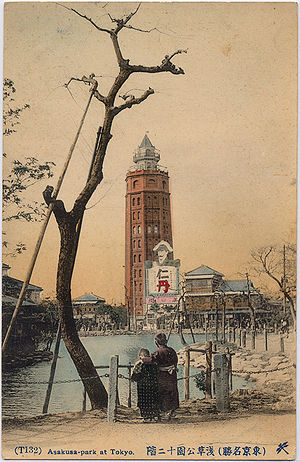
Today, Tokyo Skytree stands as the modern landmark of the city. But in the Meiji era, Asakusa was home to a legendary tower praised for being "high enough to reach the clouds." Its name was Ryounkaku, popularly known as Asakusa Ju-ni-kai (The Twelve-Story Tower).
Built in 1890, this 52-meter structure was Japan's tallest building and the first to feature an electric elevator—a true symbol of cutting-edge technology. However, disaster struck early on when the elevator broke down and was forced to stop operations.
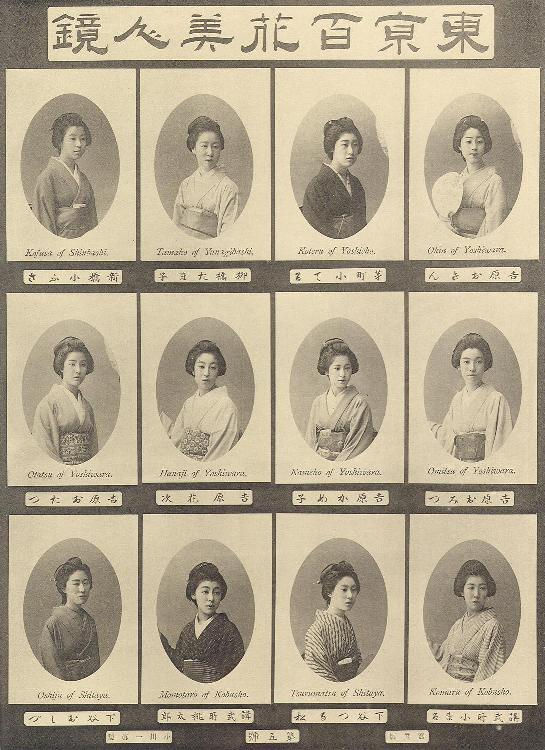
Faced with a crisis as visitors avoided the exhausting climb, the management devised what newspapers called a "masterstroke of strategy." This was Japan's first beauty pageant, the "Tokyo 100 Beauties" (Tokyo Hyakubijin), held in 1891, which swept all of Asakusa into a whirlpool of excitement.
A Genius Idea: Turning "The Pain of Walking" into "The Joy of Discovery"
With the elevator out of service, the only way to reach the 12th-floor observation deck was by stairs. To give visitors a reason to climb, the management combined "beauty portraits" with a "general election" system. They turned the stairwell into a gallery, displaying portraits of 100 geishas. Visitors would pick their favorite as they climbed and cast their vote at the summit. This unprecedented interactive event was a "magical trick" that transformed the frustration of walking into a form of entertainment.
Transforming the Stairs into a "Gallery of 100 Beauties"
Once voting began, the frenzy surpassed a simple contest, mirroring the "idol culture" of today:
Massive Voting Wars: Wealthy patrons, desperate to see their favorite geisha win, bought tickets in bulk and climbed the stairs repeatedly to cast thousands of votes.
Scandals and Extensions: The rivalry was so intense that rumors of foul play emerged, and the event was extended far beyond its original schedule due to its overwhelming popularity.
"Oshi-katsu" Frenzy: A Meiji-Era General Election
Once voting began, the frenzy surpassed a simple contest, mirroring the "idol culture" of today:
Massive Voting Wars: Wealthy patrons, desperate to see their favorite geisha win, bought tickets in bulk and climbed the stairs repeatedly to cast thousands of votes.
Scandals and Extensions: The rivalry was so intense that rumors of foul play emerged, and the event was extended far beyond its original schedule due to its overwhelming popularity.
The Impact by the Numbers
150x Increase in Visitors: Daily attendance jumped from 300 to 10,000 people. A record-breaking 50,000 people visited in just five days.
48,000 Votes: Since one ticket equaled one vote, 48,000 votes meant nearly every visitor made the grueling climb to the 12th floor for their favorite girl.
The First Queen: 17-year-old "Tamagiku"
The crown of the first queen went to Tamagiku from the Shinbashi district. Only 17, her beauty and elegance were said to be peerless. She was awarded a solid gold necklace with a diamond. However, her victory was the result of a fierce battle, with rumors that her wealthy supporters cast over 1,000 votes each.

The Miracle of the "Unbound Hair": Otsuma’s Modern "Wet Look"
Amidst this high-stakes competition, Otsuma (17, real name: Tsugi Adachi) stood out. On the day of her photo shoot, her hairdresser failed to show up. In a bold decision, she rushed to the studio with her hair still wet and unbound—"Araigami". In an era where appearing in public without a meticulous hairstyle was a major taboo, she broke all the rules.
However, her natural look was a sensation. Compared to the stiff, traditional styles of the time, her sleek, one-length straight hair and "wet look" texture felt incredibly modern. In today's fashion terms, it was the perfect "effortless" and "edgy" style—a look that would go viral on Instagram today.
Though she finished outside the top rankings in the first year due to "voting wars," she became the event's biggest star. She made a triumphant comeback the next year, intentionally entering with her "Araigami" look and taking 2nd place. She became Japan's first "media idol," even becoming the face of the country's first shampoo advertisement.
Her bold charm even captivated the most powerful men in Japan. Hirobumi Ito, Japan’s first Prime Minister, was a huge fan. However, Otsuma famously prioritized her "Oshi"—the political fixer Mitsuru Toyama. When Ito tried to summon her, she refused him to see Toyama, causing even the Prime Minister to retreat in defeat.


“Historical photos colorized by AI.”
The DNA of Asakusa: Turning Crisis into Opportunity
The story of the "Tokyo 100 Beauties" is the embodiment of Asakusa’s DNA—the spirit of turning every trouble into a chance to create the ultimate entertainment.
Next time you visit Asakusa, take a short walk to the area behind Senso-ji Temple (near the Hisago-dori shopping street). There, you will find a monument quietly telling the history of the legendary "Twelve-Story Tower." [References & Links]