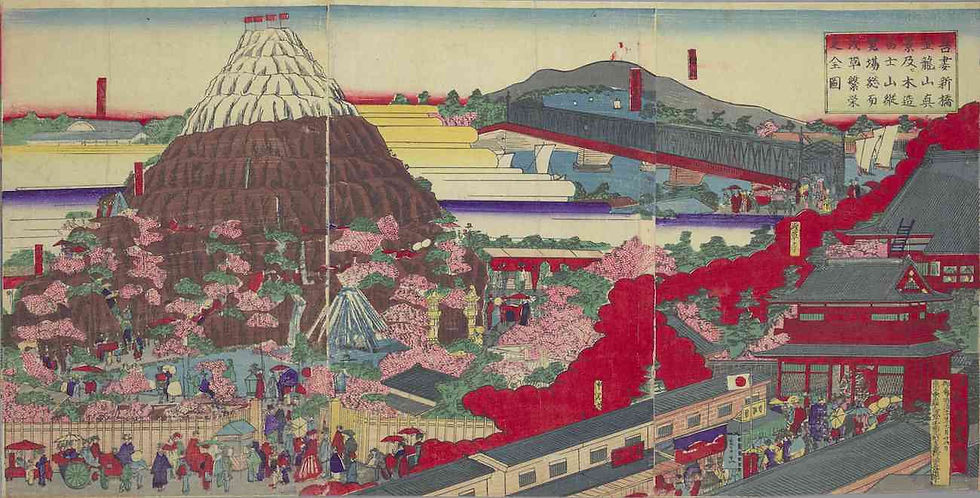
Memory of the Hanamachi Alive in Oku-Asakusa: The History of Kannon-ura Where 1,000 Geisha Once Walked
Walking Through Kannon-ura and the Hanamachi
Festivals, local food, traditional craftsmanship, and the scenic Sumida River. No matter how many times you visit Asakusa, there is always something new to discover, with every visitor finding their own unique experience. Among its many multifaceted charms, one that continues to be passed down today is the hanamachi (geisha district) culture.
Located on the north side of Senso-ji Temple is an area known as Kannon-ura. Carrying an atmosphere distinct from the bustling daytime crowds, a culture tracing its roots back to the Edo period quietly breathes here today. Let us walk through the neighborhood of Kannon-ura itself, exploring the history and captivating allure of the Asakusa hanamach.
※ What is a Hanamachi?
A term referring to a district where geisha houses are concentrated. The pronunciation varies by region; while traditionally read as "hanamachi" in the Edo and Asakusa areas, it is often read as "kagai" in regions like Kyoto. In official historical terminology across Kanto, it is also pronounced "kagai," as in the "Edo Roku-Kagai" (Six Geisha Districts of Edo). It can also be written with different kanji (花町) or referred to as a karyu (flower and willow world).

What is Kannon-ura?
As the name implies, Kannon-ura ("behind Kannon") refers to the area directly north of Senso-ji Temple’s Main Hall (Kannon-do). While the name "Oku-Asakusa" (Deep Asakusa) is increasingly heard today, those who have known the area for a long time may feel more familiar with the name Kannon-ura.
While the main approach stretching from Kaminarimon Gate to Nakamise Street surges with tourists, time flows at a slightly more relaxed pace in Kannon-ura. Old-fashioned eateries, traditional ryokan restaurants, small local workshops, and residences blend together, preserving a warm shitamachi (downtown) charm. Despite being right next to Senso-ji, an everyday landscape unfolds here that feels distinct from a typical tourist spot.
During the Edo period, teahouses and restaurants gathered around Senso-ji, bustling with pilgrims and theatergoers. The Kannon-ura hanamachi developed as a place to entertain these visitors. The temple town of Senso-ji and the hanamachi grew side by side over many generations.
Asakusa: Edo’s Premier Entertainment District
Walking through present-day Asakusa, you might view it primarily as a historic temple town. However, in Edo-period Asakusa, there was much more to the story. While thriving as a temple town, it evolved into one of Edo’s leading entertainment hubs, packed with theaters, side-show huts, teahouses, and eateries. Drawing a modern comparison, it was like a temple, a theater district, and a bustling downtown all wrapped into one.
People came to pay their respects at the temple, but they also watched plays, shopped, enjoyed delicious food, and immersed themselves in the performing arts. Out of this rich accumulation of culture, Asakusa’s distinct hanamachi culture was born.
A Town Where 1,000 Geisha Gathered
The history of the Asakusa hanamachi dates back to the Edo period. As a temple town, Asakusa drew vast crowds of worshippers and theatergoers. Alongside the teahouses and restaurants catering to these visitors, the hanamachi culture flourished, eventually making Asakusa one of Tokyo’s premier geisha districts.
During its peak in the Taisho period, the district was said to house:
Approx. 1,000 Geisha
Approx. 250 Machiai (assignation houses)
Approx. 50 Ryotei (high-end traditional restaurants)
It may be hard to imagine from modern Asakusa, but Kannon-ura at the time was a glamorous world where geisha bustled through the streets, the sounds of the shamisen echoed, and the lanterns of ryotei lit up the night. As one of the largest geisha districts in Tokyo, it truly served as a symbol of Asakusa’s cultural identity.
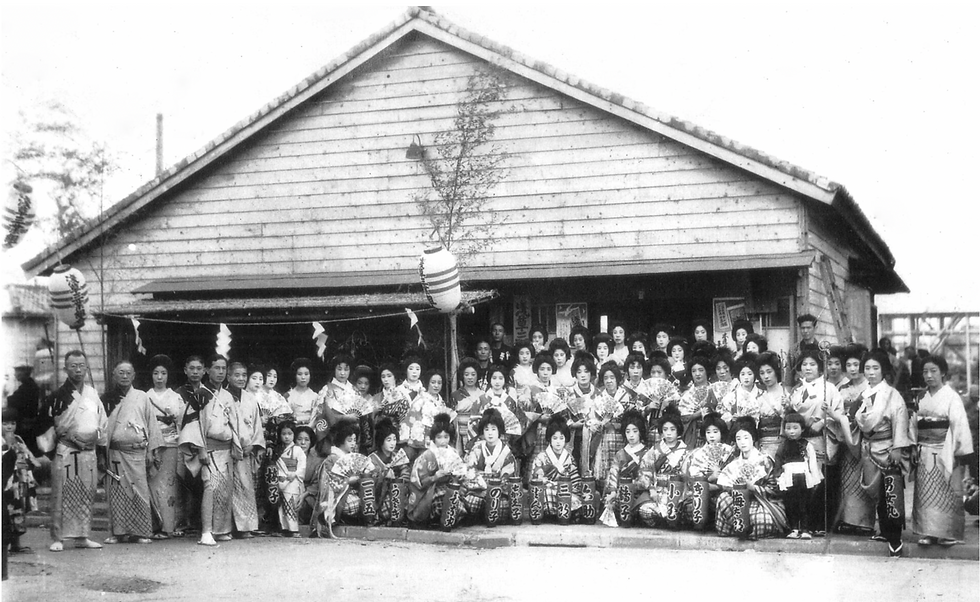

(Taisho Period) The 3rd Tokyo Grand Welcome Event: "Asakusa Park Geisha Procession"

May 18, 1948 (Showa 23)
A Hanamachi Unique to a Town of Performing Arts
While the hanamachi of Shinbashi and Yanagibashi developed strong ties with political and business leaders, the Asakusa hanamachi possessed a slightly different character. As a performing arts district filled with theaters and yose (vaudeville houses), Asakusa attracted dynamic cultural figures—Kabuki actors, entertainers, writers, and painters.
Because of this, Asakusa geisha were expected to possess not only physical beauty, but also impeccable artistic mastery and a spirited, stylish demeanor (kippu). "Asakusa geisha are master artists." This reputation has remained a source of pride for Asakusa from its heyday all the way to the present.
Ichimaru: The Star Born from the Asakusa Hanamachi
Among the 1,000 geisha active during the district's peak, one rose to become a nationwide star: Ichimaru. Making her debut as an Asakusa geisha in 1926, she captivated audiences with her stunning looks and beautiful voice. She later debuted as a professional singer and achieved massive national popularity with her hit song "Tenryu Kudareba."Delivering the artistic refinement she honed as a geisha to the entire country, Ichimaru stands as an icon of the culture and art fostered by the Asakusa hanamachi.
Incidentally, the residence in Yanagibashi where Ichimaru spent her later years still stands today as the charming renovated heritage cafe "Lucite Gallery," preserving the memory of those days.

Hanamachi: A Culture of Art and Hospitality
One cannot talk about the hanamachi without mentioning the geisha. Geisha hone their crafts—such as traditional dance, singing, and playing the shamisen—to entertain guests at banquet gatherings (ozashiki). Refined movements, sophisticated conversation, music, and dance. In the hanamachi, a uniquely Japanese culture thrives where art and hospitality are seamlessly unified. And Asakusa remains one of the few places where this tradition is kept alive today.

October 16, 1958 (Showa 33) "Asakusa Grand Tourism Festival Eve"
Why the Hanamachi Survived in Asakusa
Tokyo was once home to numerous hanamachi. However, with changing times, many evolved into something else or vanished entirely. Behind the Asakusa hanamachi’s enduring presence lies the neighborhood's long-standing history of cherishing performing arts and culture.
Having flourished as a temple town since the Edo period, Asakusa attracted crowds of pilgrims and theatergoers. Geisha began playing active roles within the culture of teahouses and restaurants serving these guests, gradually shaping the Asakusa hanamachi. Furthermore, Asakusa possessed an authentic downtown spirit nurtured by local festivals, traditional arts, artisans, and merchants. In this town, culture was not something distant or exclusive; it lived right alongside everyday life.
It is precisely for this reason that the hanamachi was passed down as a natural part of the local community. Overcoming numerous hardships—including the Great Kanto Earthquake and the air raids of World War II—the Asakusa hanamachi continues to live on within the streetscapes of Kannon-ura.
The Kenban: The Heart of the Hanamachi
An indispensable entity when discussing the hanamachi is the kenban (geisha registry office). The kenban is the central hub of a geisha district, responsible for dispatching geisha to engagements and organizing their daily training. It acts as the core engine supporting the district’s operations.
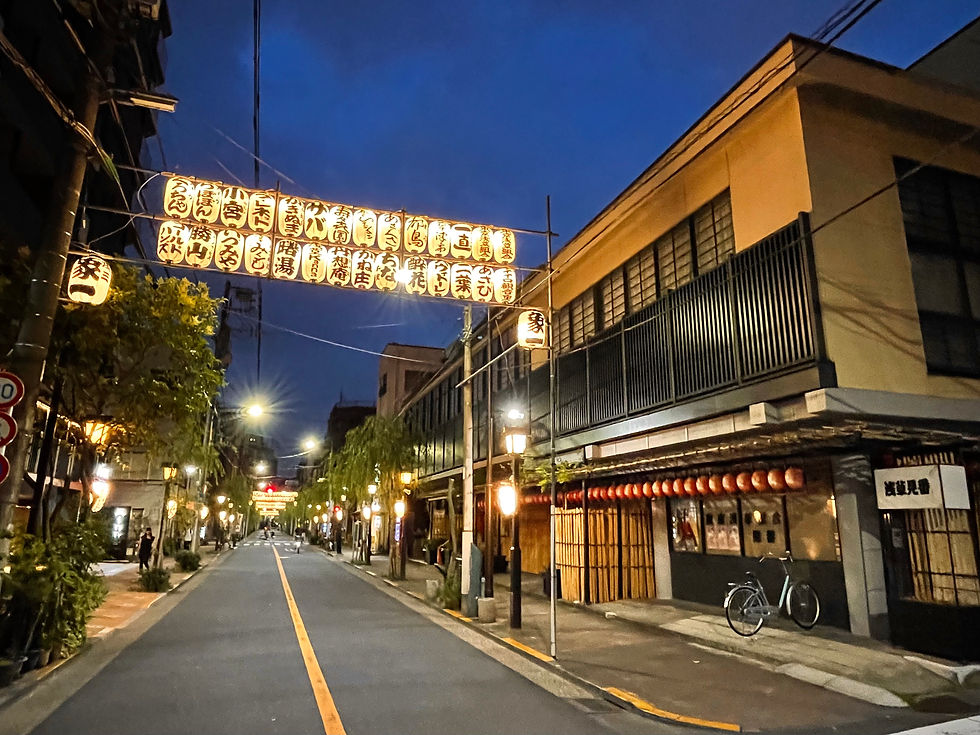
The Asakusa Kenban continues to exist in Kannon-ura, where geisha practice their arts daily. Unbeknownst to many, hanamachi culture is not a artifact of the past. It continues to be passed down within this town today. Walking through Kannon-ura allows you to feel the presence of this "living culture." ※ Note on the Asakusa Kenban: The Asakusa Kenban (Asakusa Sangyo Kaikan) was beloved for many years as the hub of the Asakusa hanamachi, but due to structural seismic safety concerns, the building was closed in November 2025. Today, the activities of the Asakusa hanamachi continue uninterrupted, with geisha practice sessions and union operations relocated to a new facility.
The Sanja Matsuri and Asakusa Geisha
The Asakusa hanamachi is not a culture confined strictly to banquet rooms. Geisha have long been involved in local events and festivals, helping sustain Asakusa’s cultural fabric. The ultimate symbol of this bond is the Sanja Matsuri.
Held every May, as the streets of Asakusa ignite with excitement, Asakusa geisha participate alongside neighborhood associations and palanquin bearers, adding grace and color to the festivities. Hanamachi culture was never preserved solely inside high-end ryotei. Walking hand in hand with local festivals and community events, it has survived as an integral part of this town’s living heritage. That is why the Asakusa hanamachi is far more than a tourist attraction—it is a living culture bound to everyday life.

January 1958 (Showa 33) "Asakusa Matsuri Daimyo Procession"
The Last Town in Japan with "Hokan"
The Asakusa hanamachi possesses another very special cultural tradition: the hokan (male geisha). They are also commonly referred to as taikomochi. Hokan are male entertainers who enliven banquets, entertaining guests through storytelling, dance, and witty banter. While once found in hanamachi across the country, there are virtually no places left today that preserve this tradition. Asakusa is renowned as the last remaining district in Japan maintaining the hokanculture. It is not just about geisha—the Asakusa hanamachi preserves the true spirit of Edo iki (stylish sophistication).
The Glamour of Edo Depicted in Ukiyo-e
In Edo-period Asakusa, famous teahouse poster girls, Kabuki actors, and geisha became popular icons, frequently featured as subjects in ukiyo-e woodblock prints. These artworks vividly preserve the aesthetic sensibilities of women and the hanamachi culture of the time.
The intricate kimono patterns, hairstyles, gestures, and expressions—a single ukiyo-e print conveys the rich culture enjoyed by the people of Edo. As you walk through modern Kannon-ura while looking at ukiyo-e prints, you begin to feel a shared atmosphere quietly running through the town across the centuries.

Suzuki Harushobu "Osen, Kikunojo, and Ofuji" Horizontal Large Format Nishiki-e, Meiwa Era (1764–1771), Tokyo National Museum Collection
Taking a Walk Through Kannon-ura
The charm of Kannon-ura goes beyond simply visiting famous sights. Wandering down narrow alleys, admiring old architecture, and absorbing the local atmosphere—that is the true way to enjoy Kannon-ura.
Strolling past a traditional ryotei. Noticing seasonal flowers displayed in an entryway. Glancing up to catch a glimpse of Senso-ji’s five-story pagoda. Within these unassuming everyday scenes lies the rich history accumulated by this neighborhood. The alleys where geisha once bustled past and the cobblestone paths leading to fine dining spots remain naturally blended into today's cityscape. A serene, composed expression of Asakusa, away from the daytime bustle. That is the kind of time that flows through Kannon-ura.
What the Hanamachi Has Nurtured
Asakusa holds a wide array of charms. There is the energetic bustle of Kaminarimon and Nakamise, the vibrant festivals, artisan traditions, and the scenic vistas along the Sumida River. And the hanamachi culture preserved in Kannon-ura is another irreplaceable piece of that identity.
What the hanamachi has cultivated is not limited to traditional performing arts like dance and the shamisen. Etiquette, attentiveness, and the art of interpersonal connections—the wisdom and manners required to entertain guests and build meaningful relationships were also core to hanamachi culture.
In Kannon-ura’s past, geisha, ryotei, okiya (geisha houses), hokan, and countless regular patrons gathered together to sustain a unified culture. Though the golden age when over 1,000 geisha filled the streets has passed, the spirit of hospitality remains unbroken. Rehearsals continue, geisha take part in the Sanja Matsuri, and the lanterns of ryotei still glow warmly in Kannon-ura.
Walking through Kannon-ura reveals that Asakusa is not merely a sightseeing destination, but a living place that nurtures people, connects community, and passes down tradition. The next time you visit Asakusa, take a small detour and wander through Kannon-ura. There, the memory of a geisha district dating back to Edo and a rich culture of hospitality still quietly thrive today. [References & Related Links]
History of Taito Ward (Taito-ku Shi)
Tokyo Meisho Zue (Illustrations of Famous Places in Tokyo)
Showakan Digital Archive
National Diet Library Digital Collections
U.S. National Archives and Records Administration (NARA)
Asakusa Kenban
Sumi Asahara, Ozashiki Asobi: Asakusa Hanamachi – How to Enjoy the Chic Sophistication of Geisha
Sumi Asahara, Tokyo Roku-Kagai: Learning the Japanese Spirit from Geisha
Kumiko Nishio, Business Administration of Kyoto’s Kagai
Ichimaru (Wikipedia)
Lucite Gallery