
Is Asakusa’s Name Tibetan? Tracing Kawaguchi Ekai’s “Āśā Kuśa” Theory
Where did the name “Asakusa” come from?
It is one of Tokyo’s best-known place names, appearing in all kinds of media every day. Yet its origins are, in fact, unclear.
The most widely accepted explanation today is that this area once lay within the vast Musashino plain and came to be called Asakusa, literally “shallow grass,” because its grass was sparse compared with the thick growth elsewhere. Taito City’s Central Library likewise presents “a place of sparse grass in Musashino” as the established explanation.
Yet Asakusa also has a curious etymological theory quite unlike this one.
“Could Asakusa have come from the words ‘āśā kuśa’?” Known as the “Tibetan theory,” it can sound at first like an outlandish idea that forces a connection between Asakusa and Tibet.
But when we learn more about the man said to have proposed it, the story begins to look a little different.
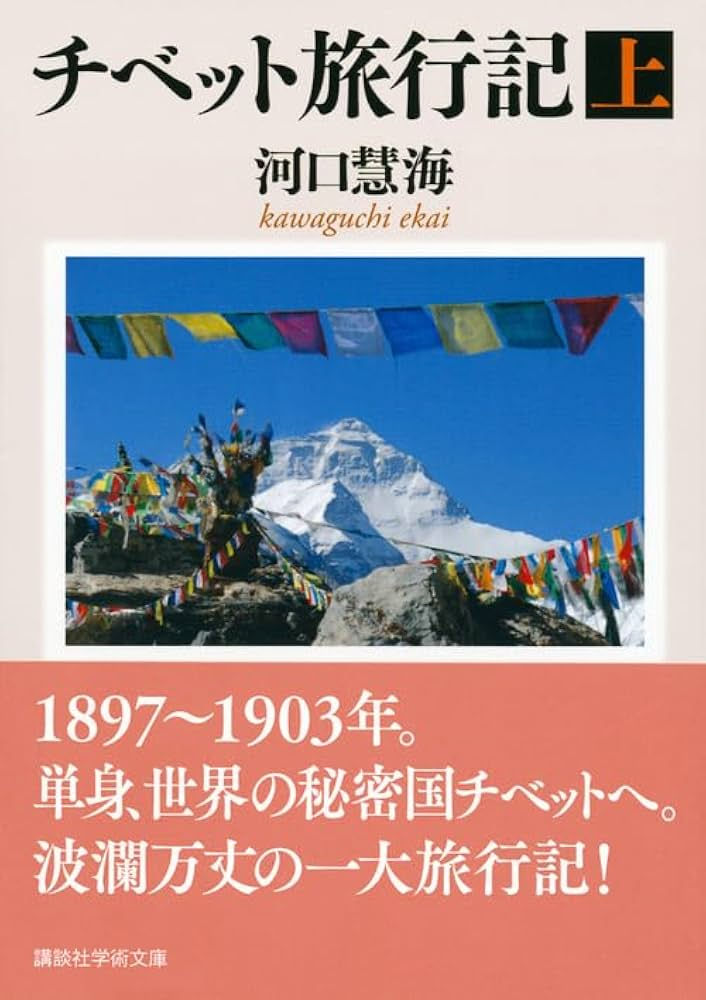
That man was Kawaguchi Ekai.
“Āśā means a location; kuśa means grass or sacred”
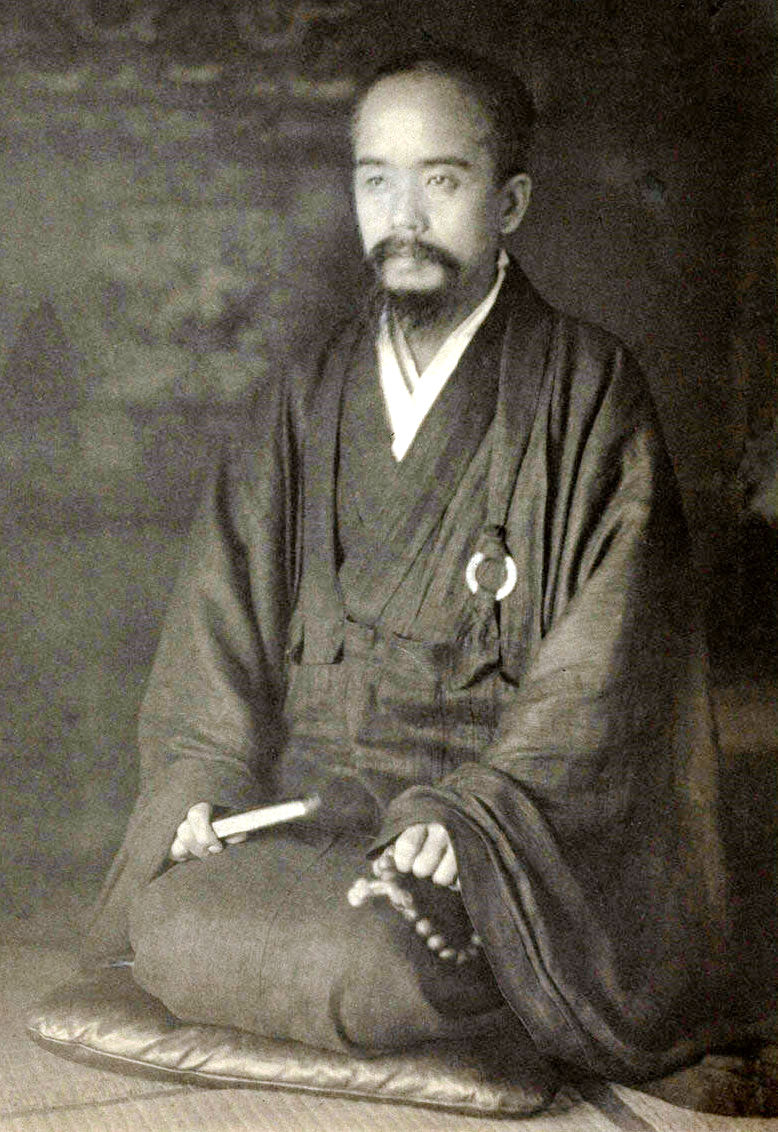
Sensō-ji Shidanshō, written in 1962 by the Sensō-ji priest Amino Yūshun, introduces several theories about Asakusa’s name. Sensō-ji itself still publishes the book, describing it as essential reading for understanding the temple, including studies of Asakusa Kannon and the history of its reconstruction.
Among them, introduced as “the theory advocated by the Reverend Kawaguchi Ekai,” is the Tibetan theory deriving the name from “āśā kuśa.” The History of Taito City explains Ekai’s theory by saying that āśā denotes a “location” and kuśa has two meanings: “cogon grass” and “sacred.”
Two interpretations are said to follow: “a place where cogon grass grows,” and, because Shō Kannon Bodhisattva is enshrined there, “a place where the holy one dwells,” or a place inhabited by something sacred.
Read on its own, this certainly seems a rather bold etymology. Who, then, was Kawaguchi Ekai, the man who proposed it?
In search of Buddhism’s original texts, to Tibet
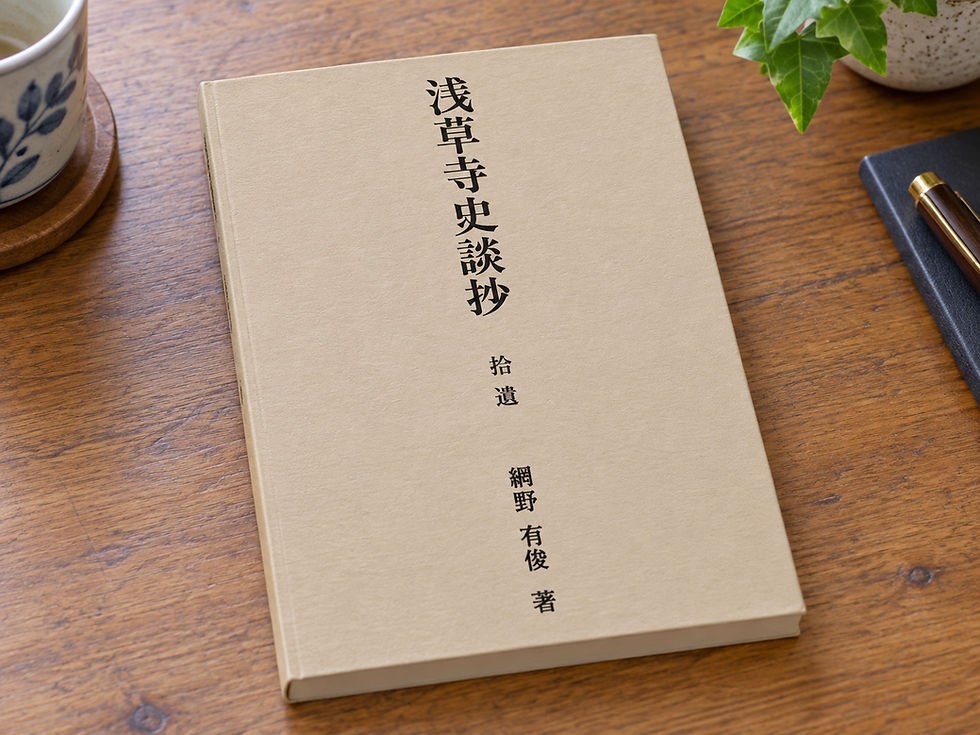
Kawaguchi Ekai was born in 1866 in what is now Sakai, Osaka Prefecture. After moving to Tokyo, he entered the priesthood at Gohyaku Rakan-ji in Honjo. In 1890, he briefly became the temple’s chief priest. The location is around today’s Midori and Ryōgoku in Sumida City.
But a secure position as a temple’s chief priest was not what Ekai truly sought. Reading an immense body of Chinese-translated Buddhist scriptures at Ōbakusan in Kyoto, he began to question something. There were multiple Chinese translations of what should have been the same scripture, yet their wording differed. Their order differed. Sometimes even their meaning differed. Which, then, came closest to the Buddha’s true teachings?
In his Chibetto Ryokōki, or Travels in Tibet, Ekai writes that he eventually reached this conclusion:
“The only way is to obtain the original texts.”
Without consulting the Sanskrit originals, he believed, he could not know the truth. Yet by then, many Sanskrit originals of Mahayana Buddhist scriptures had already been lost in India, Buddhism’s birthplace.
There was, however, a place where many of these works had been translated directly from India and preserved within a vast body of Buddhist literature. That place was Tibet.
Ekai himself wrote that most original Mahayana texts had been lost in India but survived in Nepal and Tibet, and that comparing Tibetan and Chinese translations had great scholarly value.
That was why he went to Tibet. Not to travel or seek adventure, but to read Buddhism’s original texts, draw closer to the truth, and come to understand it. That was his purpose.
Across the Himalayas, into the world of Sanskrit
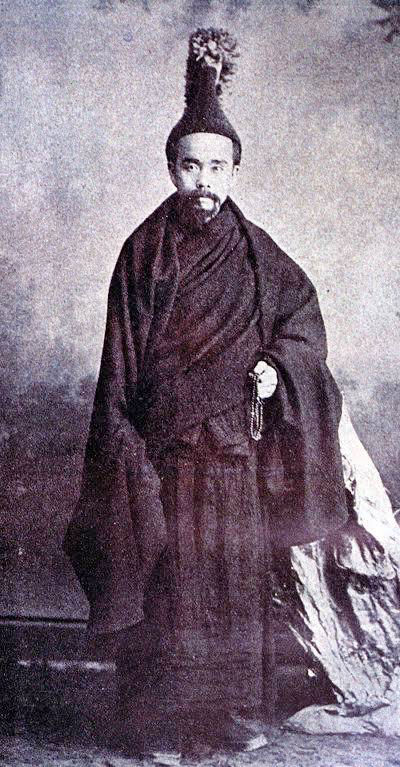
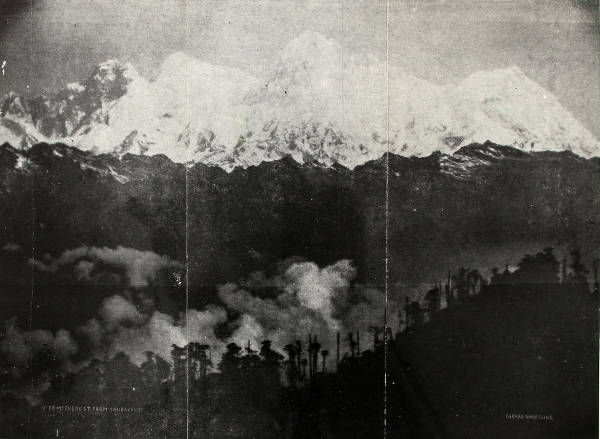
At the time, Tibet severely restricted entry by foreigners. Even so, Ekai crossed the Himalayas and became known as the first Japanese person to reach Lhasa, in 1901.
His journey did not end there. Beyond the Tibetan scriptures lay another layer. Seeking Sanskrit at their source, Ekai pursued the original texts of Buddhism still further.
According to materials from Toyo University, Ekai had questioned Japanese Buddhist scholarship’s exclusive reliance on Chinese translations since his youth. He studied Tibetan and Sanskrit and argued for the need to research the original texts. Once in India, he made the sacred Buddhist city of Benares his research base.
The preface to Three Years in Tibet, published in English in 1909, records a deeply symbolic scene. At Sarnath, outside Benares, Ekai sat beneath a bodhi tree reading a Sanskrit manuscript of the Lotus Sutra. A journey that had begun 18 years earlier with reading the sutra in Chinese translation in Kyoto had finally brought him to its Sanskrit original in India.
The preface ends with “Central Hindu College, Staff Quarters, Benares City, 1909.” This does not merely mean that Ekai visited the college.
For more than seven years, Ekai used Benares as his Indian research base. Living in the staff quarters of Central Hindu College, he studied Sanskrit there and at Government Sanskrit College.
At Central Hindu College, he studied Sanskrit grammar and classical literature under the renowned Sanskrit scholar Ram Avatar Sharma and others. Having studied Buddhist scriptures in Tibet, Ekai continued to delve more deeply into their Indian source language in Benares. Founded by Annie Besant in 1898, Central Hindu College later became one of the institutions from which Banaras Hindu University (BHU) was formed.
In other words, the man said to have proposed the “āśā kuśa” theory was not simply a monk who had traveled through Tibet.
He read Buddhist scriptures in Chinese translation, mastered Tibetan, crossed the Himalayas, and then spent years studying Sanskrit in India. A Buddhist scholar of exceptional linguistic ability, he moved between the worlds of Chinese, Tibetan, and Sanskrit in an effort to understand the original texts themselves.
Sanskrit comes into view behind the “Tibetan theory”
What, then, is the crucial expression “āśā kuśa”? As we investigate, the story grows still more intriguing.
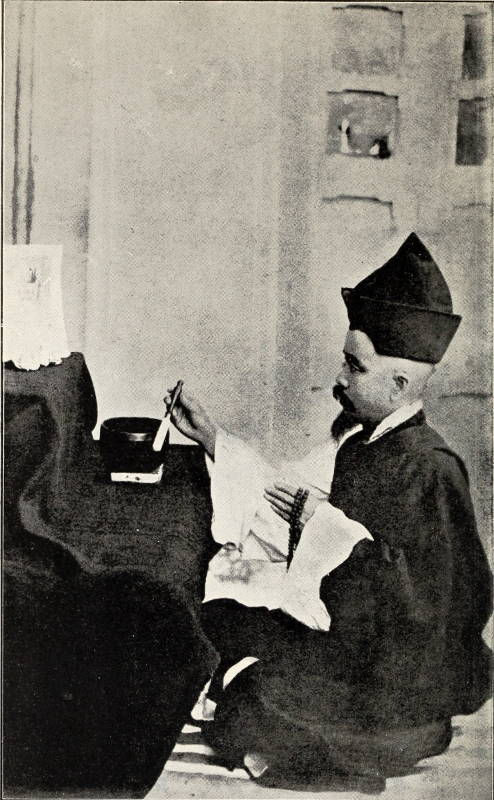
The word āśā does indeed exist in Sanskrit, the language of ancient India. Best known for meaning “hope,” it also has older senses such as “space,” “region,” and “direction.” These are quite close to the explanation attributed to Ekai that “āśā denotes a location.”
The case of kuśa is clearer still. This too is a genuine Sanskrit plant name, referring to a grass used in ancient Indian religious rituals.
The Mahāvyutpatti, a bilingual glossary compiled in ninth-century Tibet to support accurate translations of Sanskrit Buddhist scriptures, lists the Tibetan ku sha opposite the Sanskrit kuśaḥ. Originally a Sanskrit–Tibetan glossary, it later gained equivalents in Chinese and other languages.
The version available for consultation today lists:
•Sanskrit: kuśaḥ
•Tibetan: ku sha
•Chinese: 吉祥草 / 孤沙
These are the forms it records.
The Chinese 孤沙 transcribes the sound of kuśa, while 吉祥草, “auspicious grass,” is a name used in Chinese Buddhism. In other words, both the Tibetan ku sha and the Chinese 孤沙 lead back to the Sanskrit kuśa when their origins are traced.
Seen this way, Kawaguchi Ekai’s “āśā kuśa theory,” commonly called the “Tibetan theory,” begins to look rather different.
It seems likely that what Ekai was considering was not a word native to Tibet, but the Sanskrit world of Indian Buddhism preserved within Tibetan Buddhism. Might the “Tibetan theory” really be a “Sanskrit theory”?
Kuśa: the grass spread on the seat where the Buddha attained enlightenment
Following kuśa further reveals the special place this grass held in Buddhism. In Chinese Buddhist dictionaries, kuśa is transcribed as 姑奢, 俱舒, 矩尸, and other forms, and is also known as 吉祥草, “auspicious grass,” or 吉祥茅, “auspicious thatching grass.”
Interestingly, Buddhist tradition is woven into the name “auspicious grass” itself. Buddhist dictionaries explain that, just before the Buddha attained enlightenment, a person called the “Auspicious Youth” offered him this grass. Because he spread it beneath him and sat on it, it came to be called “auspicious grass.”
Kuśa, then, was more than simply a plant that grew in ancient India.
In the Buddhist account of enlightenment, Siddhartha, on the verge of awakening, receives the grass, spreads it beneath the bodhi tree, and sits upon it. There he overcomes Māra, attains enlightenment, and becomes the Buddha.
Kuśa continued to be used in later Buddhist rites, and Tibetan Buddhist writings also preserve it under the name ku sha as a grass used in religious rituals.
In other words, kuśa is not, in dictionary terms, an adjective meaning “sacred.” Within religious culture, however, it is a grass used in sacred rites and associated with the seat of the Buddha’s enlightenment.
This helps us see a possible background to the account that Ekai explained kuśa as both “grass” and “sacred.” Perhaps he understood and described it not merely as the name of a grass, but as a grass endowed with sacred significance. And the pairing of “grass” and a “youth” brings to mind another intriguing story in Sensō-ji’s founding tradition.
According to that tradition, on the morning after a Kannon image was drawn from the Sumida River in 628, ten young grass-cutters built a grass hut using akaza, or goosefoot, and enshrined the sacred image within it. Of course, akaza and kuśa are different plants, and there is no evidence directly connecting this tradition with Ekai’s theory. Still, “grass” and a “youth” appear in the Buddhist traditions of distant India, just as “grass” and “youths” appear in the story of Asakusa’s beginnings. That overlap, too, offers something intriguing to consider as we explore Asakusa’s ancient stories.
Sanskrit sounds traveled through China to Japan
There is another important point here.
When Buddhism spread from India to China, not every Sanskrit word was translated by meaning. Transcription, rendering the sounds of a foreign word in Chinese characters, was also widely used. Many traces of this practice remain in modern Japanese.
For example:
nirvāṇa → 涅槃 (nehan)
kṣaṇa → 刹那 (setsuna)
stūpa → 卒塔婆 (sotoba)
śarīra → 舎利 (shari)
These are just a few examples.
In other words, Words of ancient India ↓ Transcribed into Chinese characters in China ↓ The Korean Peninsula ↓ Japan
This journey of words really did take place.
And kuśa was no exception.
In Chinese Buddhism, it was transcribed as 姑奢, 俱舒, and 矩尸, among other forms, and transmitted through translated names such as 吉祥草, “auspicious grass.”
Could a sound close to āśā kuśa also have traveled east with Buddhism and reached Japan? Beyond this point, we enter the realm of hypothesis rather than historical fact.
At the very least, however, the route by which Sanskrit Buddhist vocabulary passed through China to Japan certainly existed.
Kuśa and kusa: alike not only in sound, but in meaning
Still more curious is the resemblance between kuśa and the Japanese kusa. They sound alike. They even share the meaning “grass.”
Of course, this alone cannot establish a common origin. Kusa has long been used as a Japanese word, and there is no basis for asserting that “kuśa became the Japanese kusa.” But if the sound kuśa did enter Japan with Buddhism, we can imagine the possibility that it was understood in association with the already existing Japanese word kusa.
Put the sounds āśā and kuśa together, and we have “āśā kuśa.” The sound of “Asakusa” seems to overlap with it.
Was it coincidence?
Had some form of linguistic transmission taken place?
Sound alone cannot give us an answer.
Yet it is intriguing to wonder what a scholar who ranged as widely as Kawaguchi Ekai across Sanskrit, Tibetan, and Chinese Buddhist translations saw in this resemblance, and what it made him feel.
In 628, someone in Asakusa already knew Kannon
Let us return to the beginnings of Sensō-ji.
According to the temple’s founding account, in 628, the 36th year of Empress Suiko’s reign, the brothers Hinokuma no Hamanari and Takenari were fishing in Edo Bay, in what is now the Sumida River, when they hauled up an image in their net. The local leader Haji no Matsuchi (also read Manakachi or Nakatomo) worshipped the image and recognized it as Shō Kanzeon Bodhisattva. He is said to have later turned his home into a temple and enshrined the Kannon image there.
Buddhism was officially introduced to Japan in the mid-sixth century. Sensō-ji’s founding tradition is set roughly a century later. In the temple’s account, then, there was already someone in early seventh-century Asakusa who could recognize an image of Kannon.
Of course, that does not establish that anyone in Asakusa at the time also knew the sounds of Sanskrit Buddhist vocabulary. What is clear, however, is that the story of Asakusa’s beginnings is linked to a very early Buddhist tradition.
The earliest surviving record of the place name “Asakusa” dates to 1181
Here, another gap in time emerges.
Sensō-ji’s tradition of Kannon’s manifestation dates to 628. Yet according to Tokyo’s cultural heritage materials, the first appearance of the place name “Asakusa” in written sources is an entry for 1181 in the Azuma Kagami. It records skilled shrine carpenters being summoned from “Asakusa in Musashi Province” to Kamakura to build Tsurugaoka Hachimangū.
Between the two lies a span of roughly 550 years.
When did the sound “Asakusa” first exist?
When was the name first coined?
When were the characters 浅 and 草 assigned to it?
The surviving sources do not let us see the moment the place name was born. This long silence makes Asakusa’s etymology all the more mysterious.
Kawaguchi Ekai and Asakusa: unexpected connections
There are several intriguing connections between Kawaguchi Ekai and Asakusa.
Gohyaku Rakan-ji, where Ekai was ordained, stood in Midorichō 4-chōme, Honjo Ward. Around today’s Midori and Ryōgoku in Sumida City, it was close to Asakusa, just across the Sumida River.
In 1890, the year he entered the priesthood, Ryōunkaku, commonly known as the “Asakusa Twelve Stories,” was completed in Asakusa, becoming one of Tokyo’s landmark tall buildings of the day. In Travels in Tibet, Ekai invokes it when describing a huge building he saw in Tibet: “Asakusa’s Ryōunkaku is nothing beside it. It is truly tall.” Ekai was clearly thinking of Asakusa even in faraway Tibet.
Another intriguing connection is devotion to Kannon. In Travels in Tibet, Ekai writes that Tibet calls itself “the land of the Buddha, the Pure Land of Kannon.” Devotion to Kannon Bodhisattva holds a very important place in Tibetan Buddhism.
Meanwhile, the principal image of Sensō-ji, at the heart of Asakusa, is also Shō Kanzeon Bodhisattva. Kannon devotion at Sensō-ji and in Tibet, the land Ekai risked his life to reach: that overlap is worth pondering when considering why he connected “āśā kuśa” with Asakusa.
Newspaper materials from 1945, the year Ekai died, also preserve a notice announcing that his farewell ceremony would be held at Sensō-ji.
The young man who became a Buddhist priest in Tokyo went to Tibet, traveled on to India, read Sanskrit originals, and returned to Japan with that knowledge. He is said to have heard within the sound “Asakusa” the words of distant India and Tibet.
Seen in this light, the theory that “Asakusa = āśā kuśa” might be understood not simply as a coincidence of sounds, but as a reflection born of Ekai’s many years of Buddhist and linguistic research.
To Ekai, who spent years moving between Sanskrit, Tibetan, and Chinese translations of Buddhist scriptures, “Asakusa” may have sounded a little different than it does to us.
Does “Asakusa” come from “āśā kuśa”?
Even after all this, we cannot conclude that the place name Asakusa derives from the Sanskrit āśā kuśa. The most widely accepted theories today still explain it as a Japanese place name, such as “land with sparse grass.”
At the same time, some things have come into view, as though scattered puzzle pieces were beginning to fit together. Āśā has senses connected with “region” and “space.” Kuśa is a real Sanskrit word.
It denoted a special grass used in ancient Indian religious rites and associated with the Buddha’s enlightenment. The word survived in Tibetan Buddhism as ku sha. It reached Chinese Buddhism in both transcribed and translated forms. And there are many examples of Sanskrit Buddhist terms passing through China to Japan.
Up to this point, we are not imagining things.
These are facts found within the history of Buddhism.
The mystery of distant words and the sweep of history that Kawaguchi Ekai left behind
“Asakusa comes from the Tibetan āśā kuśa.”
Read only that sentence, and the theory certainly sounds far-fetched. Yet learning about Kawaguchi Ekai, the man said to have proposed it, changes the picture a little. He read Chinese-translated Buddhist scriptures, questioned their translations, entered Tibet in search of the originals, and traveled on to India. He studied Sanskrit for years in Benares, read Sanskrit manuscripts for himself, and brought hundreds of Buddhist manuscripts to Japan.
Ekai was neither simply a traveler nor an adventurer. He was a scholar and a seeker, following words in pursuit of Buddhism’s sources.
Why did this man hear “āśā kuśa” behind the sound “Asakusa”? After years moving between Sanskrit, Tibetan, and Chinese Buddhist translations, perhaps the name sounded a little different to him than it does to us.
Of course, that alone does not make “Asakusa = āśā kuśa” historical fact. Yet perhaps it is also too soon to dismiss a theory left by someone who pursued the origins of words so persistently as mere wordplay or an eccentric notion.
It began as a curious theory about Asakusa’s name. Follow the words, however, and ancient India appears, along with the Buddha’s enlightenment, Sanskrit, the spread of Buddhism to China, scriptures preserved in Tibet, and a Japanese monk who crossed the Himalayas in pursuit of the originals. In the end, we return once more to Asakusa. Did the name “Asakusa” really travel here from distant India? We still do not know. But once we have encountered the sound “āśā kuśa” and the worlds of Sanskrit and Buddhism behind it, the two characters for Asakusa at Kaminarimon begin to look a little different.
Beyond the name of this neighborhood, where devotion to Kannon has continued for more than 1,300 years, we can imagine Buddhism’s long journey from ancient India through China, Tibet, and Japan. Perhaps Kawaguchi Ekai, too, glimpsed such a distant journey of words within the old place name “Asakusa.”
The survival of such historical possibilities is surely part of what makes Asakusa so fascinating.
References and related links
Amino Yūshun, Sensō-ji Shidanshō (Kinryūzan Sensō-ji, 1962) | National Diet Library NDL Search
Taito City, History of Taito City, Vol. 1 (Taito City, 1955)
Taito City Central Library, “The Origin of the Name Asakusa” | Collaborative Reference Database
Ekai Kawaguchi, Three Years in Tibet (1909) | Project Gutenberg
Banaras Hindu University, “Highlights of the History of BHU”
Historical Place Names of Japan, Vol. 13: Place Names of Tokyo (Heibonsha, 2002)
Azuma Kagami, a historical chronicle of the Kamakura shogunate
Planning, research, and writing: ASAKUSA LOVER History Research Office | © ASAKUSA LOVER


